

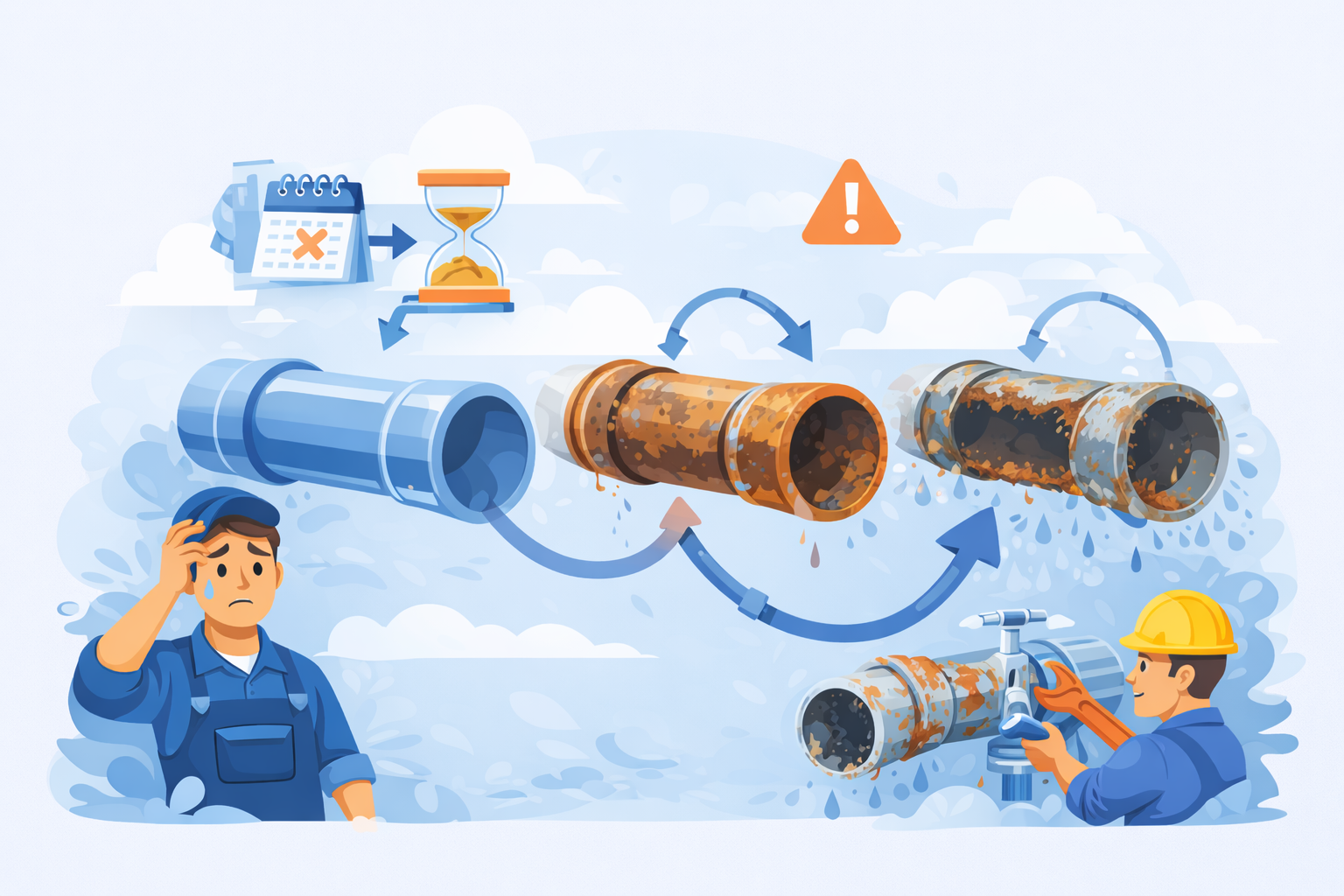
How often should the pipes in a home be replaced?
The pipes in a home do not have an exact replacement date, but their lifespan depends on the material, the quality of the installation, and usage.
In many cases, it's advisable to check them after 25-30 years, or sooner if leaks, corrosion, or pressure problems arise.
Pipes are an essential part of any home, but also one of the most forgotten… until a breakdown occurs.
Knowing when to replace them can prevent leaks, dampness, and costly renovations.
What does the lifespan of pipes depend on?
The lifespan of pipes mainly depends on the material, the quality of the installation, the water pressure, and maintenance.
Key factors:
-
Type of material
-
Age of the home
-
Water pressure
-
Daily use
-
Quality of the original installation
Lifespan of pipes by material
Copper pipes
-
Approximate duration: 40–50 years
-
Very strong and durable
-
They can suffer from internal corrosion over time
👉 In old homes, they often continue to function, but it's advisable to check them.
Galvanized steel pipes
-
Approximate duration: 20–30 years
-
Very common in old homes
-
Common problems: rust and reduced flow
👉 They are often clear candidates for replacement.
PVC or old plastic pipes
-
Approximate duration: 20–30 years
-
Sensitive to impacts and aging
-
Lower resistance than modern materials
Multilayer or PEX pipes
-
Approximate duration: more than 50 years
-
High resistance
-
Widely used in current installations
👉 They are the most common option in modern renovations.
Signs that it is advisable to change the pipes
It is advisable to change the pipes when recurrent leaks, dampness, pressure drops, or discolored or foul-smelling water appear.
Common signs:
-
Frequent leaks
-
Damp stains
-
Brown water or water with particles
-
Pressure loss
-
Very old installation
Is it mandatory to change the pipes in a renovation?
Is not always mandatory, but is highly recommended if the installation is old or has problems.
In comprehensive renovations, changing the pipes:
-
Avoid opening walls in the future
-
Increase safety
-
Revalue the property
The most common mistake: waiting for a breakdown
Many people only change the pipes when there is already:
-
Significant leaks
-
Structural damage
-
Emergency renovations
👉 Anticipating is always cheaper than repairing.
The importance of professional advice
A professional can assess the actual condition of the pipes and recommend whether to replace the entire installation or just a part.
In practice, not all homes need a complete replacement, but all need a proper assessment.
Conclusion
The pipes in a home should be inspected starting at 25-30 years, especially if they are made of old steel or plastic.
Changing in time prevents leaks, dampness, and costly renovations, and improves the safety of the installation.
More articles of interest:
Share:
Professional plumbing vs cheap materials: real differences
Why does the water pressure drop in the house and how to fix it?