

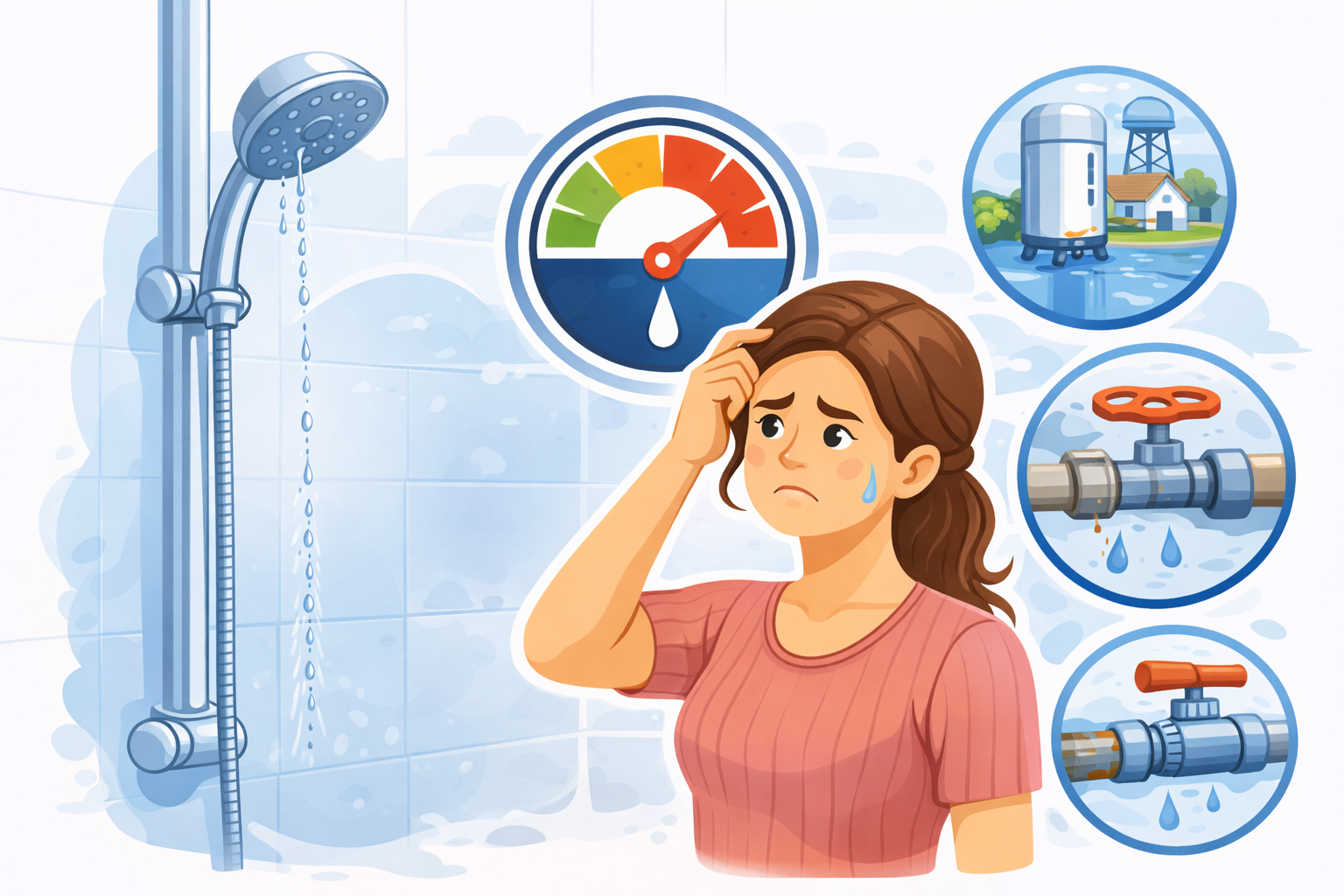
Water pressure in a home can drop due to problems in the installation, old pipes, clogs, leaks, or insufficient pressure from the supply network.
Detecting the correct cause is key to applying the right solution and avoiding breakdowns.
A drop in water pressure is one of the most frequent problems in homes. It can occur suddenly or gradually and affect showers, faucets, or appliances.
In this article, we explain why water pressure drops in the home, how to identify the cause, and what solutions exist.
What are the most common causes of low water pressure?
The most common causes of low pressure are old pipes, clogs, leaks, problems with the meter, or low pressure from the main supply.
Old or clogged pipes
Old pipes can accumulate lime, rust, or sediments that reduce water flow and cause a drop in pressure.
This problem is very common in homes with:
-
Galvanized steel pipes
-
Old installations
-
Areas with hard water
👉 The loss of pressure is usually gradual.
Water leaks in the installation
A leak, even if small, can cause a significant drop in pressure throughout the home.
Common signs:
-
Increased consumption
-
Dampness
-
Meter spinning without use
Problems with the meter or shut-off valve
A faulty meter or a partially closed shut-off valve can limit the water flow.
It is advisable to check:
-
Make sure the valve is fully open
-
That the meter is functioning correctly
Insufficient pressure from the main network
In some cases, low pressure does not depend on the home, but on the supply network.
This usually occurs:
-
During peak hours
-
In high-rise homes without a pressure booster
-
In certain areas or old buildings
Clogged filters and aerators
Faucet aerators and filters can become clogged with lime or dirt, reducing pressure.
👉 It is one of the easiest issues to solve and also one of the most common.
How to solve low water pressure
The solution depends on the cause: cleaning filters, repairing leaks, replacing pipes, or installing pressure systems.
Possible solutions:
-
Clean aerators and filters
-
Repair leaks
-
Replace sections of pipe
-
Install a pressure booster
-
Check the installation with a professional
The most common mistake: assuming that "it's normal"
Many people live with low pressure thinking it has no solution.
In most cases, it does, and it is usually simpler than it seems.
Conclusion
Low water pressure in a home is usually caused by old pipes, blockages, leaks, or supply issues.
Identifying the source allows for the correct solution to be applied and prevents major breakdowns.
More articles of interest:
👉 How often should the pipes in a home be changed?
👉 Professional plumbing vs cheap materials: real differences
Share:
How often should the pipes in a home be replaced?
What faucet to choose for your bathroom or kitchen? Practical guide